
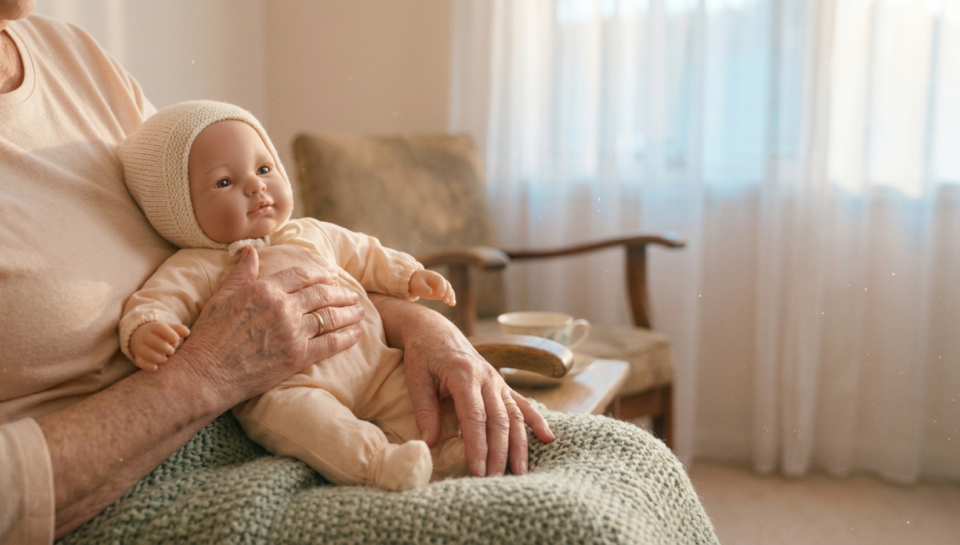
Doll therapy is a term many families and aged care providers come across when looking for gentle ways to support a person living with dementia.
In Australia, that search often leads people to realistic comfort dolls and questions about how doll therapy fits into dementia care. People may explore the idea when they want to support calm, familiarity, touch, or quiet engagement.
This topic needs careful handling. Every person responds differently. A doll is not a treatment, a cure, or a guaranteed support tool.
At Nurtura, we do not present our babies as medical devices or clinical interventions. We simply recognise that some families researching doll therapy in Australia want a realistic, comfort led doll and clearer information about the topic.
WHAT DOLL THERAPY MEANS IN DEMENTIA CARE
In everyday use, doll therapy usually means offering a realistic doll to a person living with dementia in a way that may support comfort, reassurance, or gentle interaction.
For some people, that may mean holding the doll. For others, it may mean keeping it nearby, wrapping it in a blanket, or sitting with it for short periods.
For some families, the interest is not in a product claim, but in whether a realistic doll might offer a small sense of comfort, familiarity, or connection.
Some review articles describe doll therapy as a non pharmacological approach explored in dementia care. That wording matters because it makes the limits clear. It is not medicine, and it does not replace professional assessment or treatment.
WHY FAMILIES EXPLORE DOLL THERAPY IN DEMENTIA CARE
Families often start researching doll therapy when they want non clinical ways to support calm, familiarity, or meaningful engagement.
Sometimes they notice that their loved one responds well to nurturing routines, tactile comfort, or objects that feel emotionally safe.
Some studies and reviews suggest doll based approaches may support emotional state, communication, or distress related behaviours for some people living with dementia. Even so, the evidence needs careful wording. Responses vary, and studies do not all measure the same things.
For that reason, the most respectful approach is to avoid promises. It is better to say that some families and care settings choose to explore this option, especially when dignity, comfort, and individual preference remain central.
DIGNITY, CHOICE, AND PERSON CENTRED CARE
How a doll is introduced matters just as much as the doll itself. Australian aged care guidance puts strong focus on dignity, individuality, choice, safety, wellbeing, and quality of life.
That means people should guide the experience through their own response, preferences, and life history. Others should not make assumptions on their behalf.
A respectful approach starts with offering, not imposing. Then it watches the person’s response. One person may welcome a doll and find it comforting. Another may show no interest at all. That response should guide the next step.
Families who want broader guidance may find it helpful to read official dementia and aged care information alongside any product research.
For broader guidance on dignity, choice, and person centred aged care, visit the Aged Care Quality and Safety Commission here.
Families can also explore practical dementia support information from Dementia Australia here.
The most respectful approach is not to promise what a doll will do, but to recognise that comfort is personal, and response always comes first.

WHERE NURTURA FITS, AND WHERE IT DOES NOT
Nurtura does not advise families on dementia care plans or therapeutic outcomes. Our role is simpler. We explain the language people are searching for, acknowledge why some families explore comfort dolls in aged care settings, and offer realistic babies designed for touch, holding, and connection rather than collectability.
We also think clarity matters. Our babies are not medical devices, not clinical tools, and not a substitute for advice from qualified care providers, dementia specialists, or occupational therapists.
COMMON QUESTIONS ABOUT DOLL THERAPY AND DEMENTIA CARE
Is doll therapy suitable for everyone with dementia?
No. Some people respond positively. Others show no interest, or may not want that kind of interaction at all.
Is doll therapy a treatment for dementia?
No. A more accurate description is that it is one comfort focused, non pharmacological approach that some people explore in dementia care settings.
Should families speak with a professional?
Yes, especially when they have questions about suitability, distress, care planning, or changing needs. In those cases, it makes sense to speak with the relevant care team or qualified professional, rather than relying on product marketing alone.
A GENTLE FINAL THOUGHT
Doll therapy is a term used in dementia care conversations to describe a comfort focused approach that some families choose to explore.
The key considerations are dignity, individual preference, and realistic expectations about what a doll can and cannot do.
For families who want a realistic, comfort led doll, Nurtura may feel like a relevant option to explore. We still encourage readers to consider broader dementia and aged care guidance alongside any purchasing decision.
Interested in becoming one of our first Studio clients, or exploring a future community program?
Future Studio offerings may include private childbirth education in the home, early parenting education using a simulation doll, parent and sibling preparation, and group doll therapy or play sessions for NDIS participants or aged care settings.